Rooted in Vision: The Evolution of Black Ankle Vineyards
Story and photos by Andrea Haines
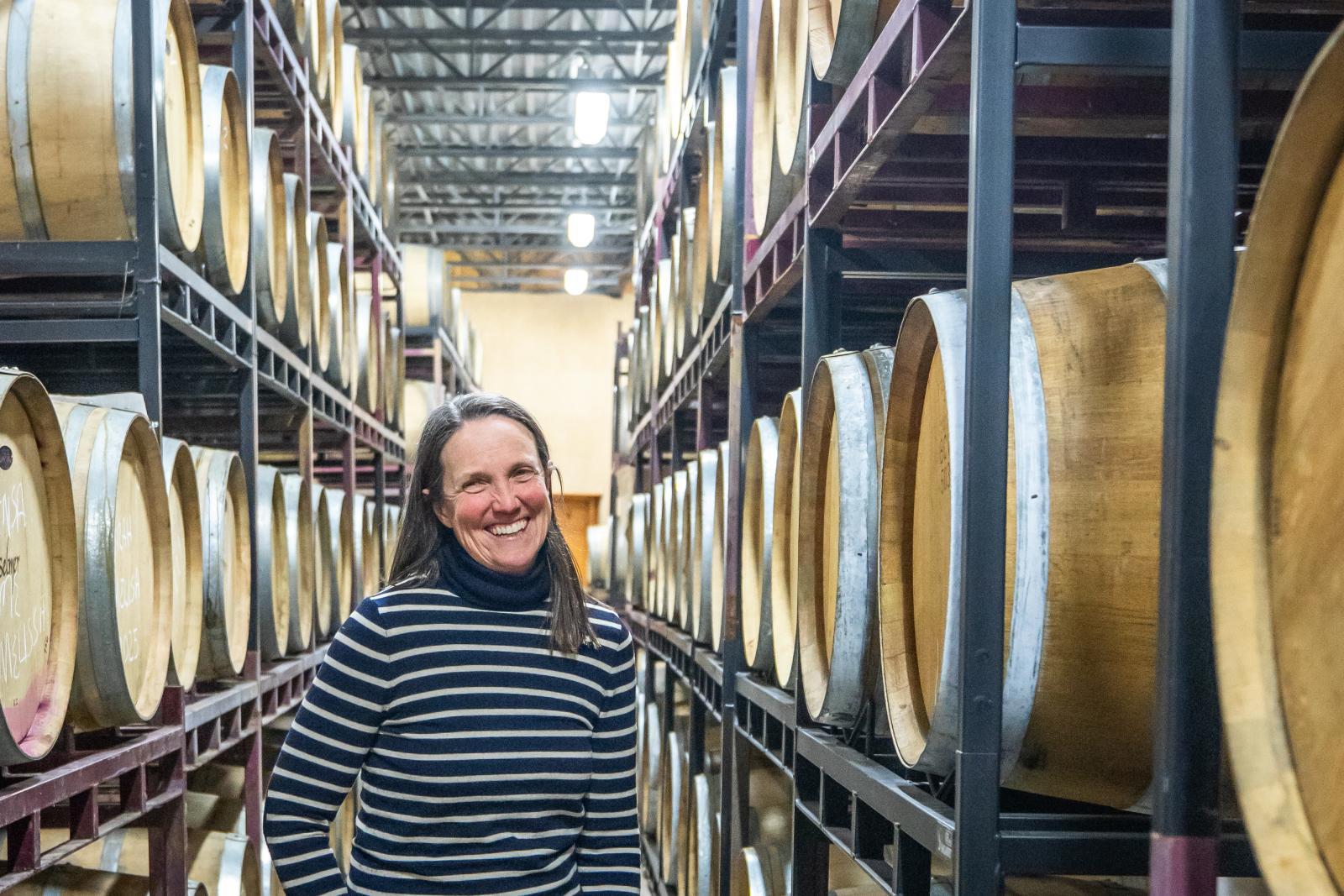
In the rolling hills of Mount Airy, Maryland, Black Ankle Vineyards stands as a testament to vision, resilience, and the evolving role of women in agriculture. What began as a bold leap into an unfamiliar sector has grown into one of Maryland’s most recognized wineries, driven by Sarah O’Herron and husband, Ed Boyce’s leadership, creativity, and determination.
From the beginning, Black Ankle was established as an estate winery, meaning every bottle reflects grapes grown, harvested, and crafted on their own land. That commitment to full-circle production remains central to their identity today.
When Sarah and her husband set out to build the vineyard, they weren’t following a generational blueprint. Instead, they built their business from the ground up, guided by a belief that Maryland’s landscape could produce world-class wines. Their approach was intentional, carefully matching grape varieties to specific soils, prioritizing sustainability, and designing a winery that reflects both environmental stewardship and craftsmanship.
That intentionality starts at the vine by combining European grape varieties with rootstock adapted to Maryland’s soils and climate. This approach allows the vineyard to grow traditional grapes while ensuring they perform well in local conditions. It’s a balance of heritage and function, rooted in both science and patience.
For Sarah, being a woman in agriculture is inseparable from being a parent. “For me, it’s very much being a parent in ag,” she explains. “It’s about integrating life into the journey.” During the vineyard’s earliest days, that integration was literal. While construction was underway, the family lived the reality of building something from nothing, raising five children alongside a growing business.
Sarah recalls staying in a tent on the property while working long days establishing the vineyard. When their son was just 11 months old, she balanced vineyard work with motherhood, often relying on family support to keep everything moving forward. In 2006, the vineyard celebrated its first “official” grape harvest and a year later, their youngest child was born, a milestone that captures the parallel growth of both family and farm.
Today, those early experiences have shaped not only the vineyard, but the next generation. Each of their now young-adult children have pursued their own path, many still connected to the business in unique ways — from developing an inventory management app to assisting with tastings and social media. The vineyard reflects that same blend of tradition, innovation, and personal investment.
Sarah’s role within the operation is expansive as she leads the winemaking process and oversees the financial side of the business, while Ed manages vineyard operations. Together, they’ve built a system that balances artistry with practicality, something Sarah says is both rewarding and challenging. “There are no two days alike,” she says.
Since Black Ankle’s early days, the business has continued to evolve. A 7,000-square-foot straw-insulated storage barn marked a step forward in sustainable infrastructure, while expanded patio seating and shaded areas enhanced the visitor experience during a time when outdoor spaces became increasingly important.
Growth has extended beyond the original vineyard. They’re now preparing multiple locations, including two in Montgomery and one in Carroll counties. Among these are Live Edge Vineyards and Tortuga, both in Clarksburg, and a Westminster site named Rinehart. Live Edge is predicted to open in 2027, offering visitors a natural atmosphere of a forestry setting.
Across their operations, they now farm more than 100 acres, cultivating 18 grape varieties and producing approximately 35 wines. These wines range from carefully blended selections to aged varietals, each reflecting the diversity of the region.
Paige Hargett, Ag Lending Manager with Farm Credit, describes the vineyard as consistently impressive. “They’ve always been dedicated, regenerative, responsible,” she says. Paige notes that the vision for Live Edge Vineyards stands out as a significant next step, and she is struck by both the setting and the execution. “The work they’ve done there, from the vineyard to the production facility, and their vision for the tasting room, speaks to the overall exquisite brand they continue to build,” she shares.
Their partnership with Farm Credit has supported both growth and adaptability. As one of the first operations of its kind in the county, Black Ankle has also helped educate others on the unique financial structure of vineyards, where inventory ages rather than turns quickly, and long-term planning is essential. Looking ahead, the focus remains on refining and expanding what they’ve built, continuing to match the right vines to the right soils, exploring new products, and strengthening each location’s identity.
At its core, Black Ankle Vineyards is more than a winery — it’s a story of perseverance, family, and innovation. And, at the heart is a woman in agriculture whose ability to balance motherhood, management, and winemaking has shaped not only a successful business, but a lasting legacy in Maryland agriculture.