Newsroom
Winners of the 2020 Foundation Scholarship
The Farm Credit Foundation for Agricultural Advancement has announced the fifteen winners of their 2020 scholarship program. Ten thousand dollars will be awarded to each of the students for a total of $150,000 to pursue their careers in the agriculture industry. The recipients are:
- Ashley Abuelhawa from Mt. Airy, Maryland
- Todd Allen from Jefferson, Maryland
- Shoshana Brody from Baltimore, Maryland
- Nathan Brubaker from Mount Joy, Pennsylvania
- Marie Bryant from Manheim, Pennsylvania
- Maci Carter from Harrington, Delaware
- James Dietrich from Hegins, Pennsylvania
- Stephon Fitzpatrick from Princess Anne, Maryland
- Emma Hockman from Maurertown, Virginia
- Amy Middleton from Philadelphia, Pennsylvania
- Lesa Ramsburg from Finksburg, Maryland
- Courtney Schrader from Earleville, Maryland
- Arilyn Tegtmeier-Oatman from Holtwood, Pennsylvania
- Lynne Thomas from Fallston, Maryland
- Abigail West from Frankford, Delaware
“We are so proud of the fifteen students who were selected to receive a scholarship,” says Walt Hopkins, Chairman of the Farm Credit Foundation for Agricultural Advancement. “The talent and determination displayed in these applications amazed all of the judges. We are very confident in the future of agriculture with these bright students leading the way.”
The non-profit Foundation was established in 2015 and is funded by participating association Horizon Farm Credit. The Farm Credit Foundation for Agricultural Advancement’s scholarship program awards scholarships valued at $10,000 to high school seniors or students currently enrolled in an advanced educational program. The applicants must be planning to pursue a career in agriculture and reside in a county within Horizon Farm Credit’s five-state territory.
“With more than 100 applications submitted this year, the competition was high,” adds Hopkins. “I encourage everyone to apply again next year if they qualify and to keep pursuing their dreams. Careers in agriculture are abundant and important to support the industry.”
For more information about the scholarship and other Foundation programs, please visit fcfoundationforag.org.
Newsroom
Hired: Tyler Majchrzak, Loan Officer
Horizon Farm Credit recently announced the hiring of Tyler Majchrzak as a loan officer. He will be based in the association’s office in Chestertown, Maryland.
“We are excited to have Tyler join our sales team to work alongside our employees and members,” says Wayne Richard, Horizon Farm Credit’s regional lending manager. “His knowledge of agriculture and connections in the community will allow him to successfully serve our customers.”
In his role as a loan officer, Majchrzak will be working with farmers and land owners on Delmarva as a partner to provide the best financing for their operations and dreams. “I hope to offer the members of Farm Credit a familiar face and someone they can put their trust in,” he says.
A current resident of Hartly, Delaware, Majchrzak grew up in Federalsburg, Maryland and attended the University of Kentucky, earning a degree in Technical Education in Agriculture. He previously worked for Reproduction Specialty Group as a Client Relations and Education Specialist, where he worked on client outreach, retention and scheduling on-farm and in-facility breeding days.
Majchrzak was involved in 4-H and FFA, serving as President of Maryland FFA from 2013-2014. He raised and showed purebred Hampshire sheep at the local and national level, and currently owns sheep with his father, raising and selling breeding stock.
Newsroom
Tom Truitt, New Chief Executive Officer
Horizon Farm Credit recently announced the promotion of Thomas Truitt to the role of Chief Executive Officer. He is based in the association’s Westminster, Maryland headquarters office.
“I am grateful to be a part of such a wonderful team here at Horizon Farm Credit,” says Truitt, who transitioned to the new position on January 1. “I look forward to beginning this new chapter as CEO and continuing to serve our customers on a daily basis.”
Truitt has been employed with Farm Credit since 1993, holding positions within the sales, credit, and IT departments. Since 2013, he has served as the Chief Operating Officer for Horizon Farm Credit. In his new role, Truitt will be working closely with board members and staff to ensure the association achieves its overall goals and objectives, and remains focused on fulfilling the Farm Credit mission.
“Thomas is well-versed in all aspects of the Farm Credit system, and his years of experience make him an excellent fit for this position,” says Wayne Lambertson, chairman of Horizon Farm Credit’s board of directors. “We are looking forward to the leadership and diverse skill set he will bring to this role.”
Newsroom
Self-Employed Homebuyers Guide to Getting a Mortgage
Note: The following information pertains to home mortgage loan products. Farm and business loans will use different loan approval guidelines.
One of the most important factors in getting qualified for a home mortgage loan is income. Lenders, both large and small, justifiably want to know that you have money rolling in on a consistent basis—as this is a good sign that that you’ll be able to repay the money you borrowed. Employees that are paid hourly or salary wages are able to prove their income basis by providing IRS Form W-2 Wage and Tax Statement from their employer indicating just how much money they earn. However, things get a little bit trickier when we start talking about mortgages for self-employed individuals.
Unlike employees that are paid hourly or salary wages, self-employed homebuyers can’t simply produce a W-2 to prove their income. Instead, self-employed applicants will be expected to produce evidence of at least the last two consecutive years in tax returns. Coming up with this information, in addition to other supporting documentation, can be some work. Lenders will calculate your taxable income basis differently depending how you report. Self-employed borrowers may use Schedule C, Schedule F or Schedule E to report self-employed income.
The most common issue self-employed individuals encounter when applying for a home mortgage loan is differentiating between how much gross income they make and the amount the government recognizes as net income, according to their tax returns.
Despite having plenty of cash flow on hand, not to mention access to credit through their business accounts, self-employed individuals are often shocked when they learn just how much their net income actually is after factoring in tax write offs and other business expenses. Conventional mortgage investors Fannie Mae and Freddie Mac base their lending decision on net taxable income.
So now that you know the challenges for self-employed folks, let’s talk about the best way to approach qualifying for a home mortgage loan. Here’s how to start: Gather all your documents. Getting your tax returns in order is of utmost importance.
GATHER AT LEAST THE LAST TWO YEARS OF TAX RETURNS.
Most residential home loan options require at least the last two consecutive years of your tax returns.
GATHER ANY OTHER APPLICABLE DOCUMENTS.
In addition, you’ll want to gather any other tax documents that may be applicable to your specific scenario. These may include:
- Schedule C
- Schedule E
- Schedule F
- Form 1120S
- K-1
- Profit and Loss Statement
Getting past tax returns and other supporting documents should be simple. Most self-employed individuals can turn to their accountants for this information.
Please enter a valid password to access this page:
Wrong password. Try again!Newsroom
Record-Breaking Patronage Distribution to Members
We recently announced a record-breaking patronage distribution of over $54 million in cash to our members this month. We returned over 73 percent of our patronage sourced income, reducing borrowers’ interest rates by almost 40 percent.
“As a member-borrower of Farm Credit, one of the most important financial benefits is sharing the profits of the association with our members through our patronage program,” says Tom Truitt, Chief Executive Officer of Horizon Farm Credit. “We are proud to distribute a record-breaking amount back to our customers this month, especially after the challenges we have all faced this past year.”
Horizon Farm Credit is a part of the national Farm Credit System. Our territory covers portions of Delaware, Maryland, Pennsylvania, Virginia, and West Virginia. Farm Credit is a member-owned cooperative, comprised of associations that are able to share a portion of their annual profits with their member-borrowers. Each association determines its total income and expenses at the close of each fiscal year. Once all expenses are deducted, the net income remaining can be distributed in accordance with the association’s bylaws.
“Since 1990, we’ve distributed more than $597 million in cash to our members,” adds Brian Rosati, Chief Financial Officer of Horizon Farm Credit. “Our cooperative structure has served our borrowers for many years, and will continue to in the future.”
In 2020, Horizon Farm Credit distributed over $50.8 million in cash to its member-borrowers.
Newsroom
Defining Customer Experience in Agriculture
On this episode of the Farm Credit AgVocates Podcast, we interview Angel Evans, Founder and CEO at AgLife Marketing, to define what customer experience is and how we can shift our focus of our own operations to better serve our customers.
In this episode you'll learn what customer experience is, what Horizon Farm Credit is doing to enhance the customer experience and how you can position your operation to be a solution provider to your customers.
Jenny Kreisher:
Welcome back to the Farm Credit AgVocates podcast. I'm your host, Jenny Kreisher, Director of Communications at Horizon Farm Credit. My guest today is not only a very good friend of mine, but someone who has made a huge impact on my career, a mentor, you could say. Angel Evans, Founder and CEO of AgLife Marketing hired me over seven years ago. Her career started in the Farm Credit system where she helped associations across the East coast up their marketing and communications game. Today she's taken her passion for helping others in a new direction with customer experience. Angel works with agricultural organizations and leaders across the country to help them learn more about their customers and employees in order to grow their business. She's also no stranger to a podcast as the host of Voice of the Farmer Podcast. You will have to check it out if you haven't already and we'll link to that in the show notes. So without further ado, welcome to the pod Angel, I've really been looking forward to having you on here since we launched.
Angel Evans:
Thank you. I was excited that you asked me I've been waiting for the invitation.
Jenny Kreisher:
Before we get into all the juicy details about customer experience, I'm hoping you can give our audience a little background on you. You grew up on the Eastern Shore of Maryland.
WAS AG ALWAYS A PART OF YOUR LIFE GROWING UP?
Angel Evans:
It's kind of difficult to grow up on the Eastern shore of Maryland and not have agriculture be part of your life because wherever you look, wherever you go, you're going to see either, cornfields, soybean fields or poultry houses. But yes, so my family actually lived as tenants on a farm in Caroline County. So that's where I first learned all about hard work from feeding cows to bailing hay, making scrapple, driving tractors. I think I was actually eight or so my mom says, when I had my first paid job working as a tomato picker at a neighbor's farm. And so I'm sure for those of you who know me, I'm like I say five foot, but 4’ 11.5’, so they actually had to make a special box thing for me to stand on, to be able to reach the conveyor belt that the tomato picker went on one. So Ag has always been a part of my life. It's also where I learned to make sure that a wire fence was off before grabbing hold of it. Yeah. I think everyone should just grab a hold of a wire fence at some point, you know, so you learn never to do that again. So now my, my dad and brother actually now own that farm that we were tenants on. They rent out some of the land and farm some of it themselves, but they have a millwright business. So working on large green facilities, green tanks elevators. And then my mom has a small five acre farmette with some beef, cattle, horses, and chickens. So, yes, to answer your question, it's, it's always been a part of my life.
Jenny Kreisher:
WHEN DID YOU BEGIN YOUR CAREER AT FARM CREDIT? YOU WERE WITH THE SYSTEM FOR OVER 20 YEARS.
HOW DID THAT START? HOW DID YOU ENTER INTO THAT WORLD?
Angel Evans:
Well, I was actually 19 when I started at Farm Credit. There is a job opening at the Denton office for Loan Assistant. So I decided to go for that. I still remember when I was wearing on that interview, it was a red suit and I had one of the Loan Assistants come out and say, well, you don't wear heels around here. So I love the culture of Farm Credit, that it is not that buttoned up. But anyway, I started when I was 19 and I worked as a Loan Assistant. I love that I had that foundation because I learned all of the ins and outs of finance, the five C's of credit, what, what makes someone eligible for a loan and the process. But my passion has always been in marketing from, since I can remember and the things I participated at school. So it was really, a natural progression and it actually progressed kind of quickly from starting when I was 19. It was just a few years that I transitioned into marketing full time.
Jenny Kreisher:
WHAT IS IT ABOUT MARKETING THAT YOU FOUND TO BE SO ENJOYABLE?
Angel Evans:
Well, I love that marketing helps people, it helps customers. Marketing has always traditionally had a bad rap reputation for, you hear the things like “oh, it's just marketing for you.” I've never viewed it that way and that's why I love customer experience so much in that marketing and particularly using customer experience isn’t about just trying to sell a product or service it's about helping people reach their goals and accomplish their goals. And so that's what I love about marketing. I wouldn't never, and have never felt comfortable trying to pitch an idea, a product, and a service to someone that I know didn't need it. And I know that traditionally, and that there are other companies out there that do that. But particularly with Farm Credit, I know we've never done that. And so it just is fueled my passion for marketing and that know we're just helping people understand what's available to them and how it can help them. So that's what I love about marketing. Just being able at the end of the day, to help people realize their dreams and accomplish their goals.
Jenny Kreisher:
I have to agree as a fellow marketer and you're right, marketing and customer experience really are aligned before we get any further into talking about customer experience or CX as our audience might hear us refer to it going forward,
DO YOU MIND DEFINING WHAT CUSTOMER EXPERIENCE IS AND KIND OF WHAT, WHAT THAT MEANS?
Angel Evans:
Sure, so when we talk about customer experience, we're saying it's the sum, total of all the interactions that customer has with a brand. So Farm Credit, when we say customer experience, we mean from the time someone that's not even a customer or prospect, a future customer sees a Farm Credit sign or an office, or has someone recommend them or calls into the office all the way through to applying for a loan, speaking with a loan officer, closing the loan, getting their patronage check, all of that. So when we talk about experience, it's not one thing, it’s the whole experience. And oftentimes people get them confused and they say, well, we already provide great customer service. Well, you only provide customer service. If someone calls in, you've had a great time service experience or, they’re a few touch marks. The experience is when they're on your way site, are you giving them a good experience? So that's not a good customer service. You can't do that on a website. I can give a good experience. So when we say CX or customer experience, that's what it's about. It's about all of those interactions and defining those and pulling them apart and making sure that every interaction with the customer is a good experience.
Jenny Kreisher:
One big piece of customer experience is customer journey. You talk a lot about journey mapping.
DO YOU MIND DEFINING WHAT A CUSTOMER JOURNEY IS AND HOW THAT PLAYS INTO THE WHOLE OVERALL CUSTOMER EXPERIENCE EFFORT?
Angel Evans:
Sure. So when we talk about the interactions a customer has, we're really talking about that journey. So, when we say customer journey, it's actually like a map or you think about if you're going on a trip. If you're going on a journey and you're going to Jamaica, for instance, you know, what, what was your journey? When did you first realize you want it to go on a vacation? And where did you look and what were you thinking and feeling as you were looking for options. And then once you decided on a place to stay, what was that like?
So for Farm Credit, when we talk about customer journey, we're talking about putting that whole experience together and drilling down into each of those interactions so that we know, okay, I need a loan for land, for farm land to expand my operation. So that first part of the journey, what am I doing? What am I thinking, how my feeling, and are there any pain points as you interact? So you split apart the entire journey, and then you look at it as a whole. You'll see, there might be some areas of that journey that your organization may be a little weaker, or not even just week, but maybe we can really elevate that part of the journey and make it easier for them, because again, it all goes back to your goal. My goal, when I think of marketing and customer experience is making sure they understand how we can help them. So we're doing a disservice, if at the beginning of their search, they don't find Farm Credit or there’s a weak part there because we're not providing to them what we know that they can use to help in their business. So it's that entire process and, and splitting it apart and looking at those individual touch points and how well the customer is.
Jenny Kreisher:
You did a really good job explaining that. That's something that I've obviously spent a few years now doing this with you. So it comes kind of second nature and I'll have to make sure to include a journey map example in the show notes for people to see it because I think when you visually see it, it definitely helps. So I'll definitely make a note for everyone to check that out in there.
You kicked off our CX initiative here at Horizon and you continue to work with a team of staff here on that project. I know you meet routinely, you had a meeting earlier today, actually.
SO CAN YOU GIVE OUR LISTENERS A LITTLE BACKGROUND ON THE CX INITIATIVE AND HOW YOU GOT THAT KICKED OFF AND WHAT Y'ALL ARE WORKING ON TODAY?
Angel Evans:
For our listeners, that whenever you're talking about a CX initiative or any initiative, it always starts at the top. I commend Horizon and the other organizations I work with the first just recognize that customer experience is what will give you a competitive advantage today because there's so many options out there for people. So really the only thing that's going to differentiate you is that experience. So at Horizon, Tom, the CEO started out with we want to do this, this is often the questions of other Ag leaders that come to me. They want to do it. They're not real sure exactly what it means or what it looks like or what the strategy should be. So that's what I do and what we did at Horizon. So we start by what do you envision and we work through what's your vision of customer experience. What's that look like at your organization? So we did that for Horizon, and then we went on our own journey of making sure that the staff was engaged, that we had some processes in place that support that customer experience mindset, and trying to transition Horizon from a, what we say is just a customer focus, which is great, but to more customer centric. So thinking like a customer, so what we've done just high level, is tried to know everything we can about Horizon customers, what they're thinking, feeling, doing what their journeys are.
We have that committee that I've met with this morning, that changes every once in a while, to help us make sure that our journey is addressing what each of those customer groups really want and need. So this process is just very smooth and that it's learning about your customers and then what their journey is, identifying their pain points and opportunities. And then coming up with some solutions, some great customer centric solutions that either solve their pain points or elevate their entire journey or pieces of their journey. So that's where we are and we continue to do that. Our focus right now is on the future. So what's the future customer of Horizon Farm Credit? Who is that? What do they look like? What are their thoughts, feelings, and actions, and how do they behave? What are their demographics look like? What are their psychographics? So that's what we're working on now. It's very exciting. We've learned some really eye opening things that I think will really help prepare Horizon for the future and, and allow Horizon to help a lot more farmers reach their goals.
Jenny Kreisher:
It is exciting. It's definitely one of my favorite parts of my job right now - doing the customer experience work and working with the committee that we have created to find those solutions, like you mentioned, to alleviate pain points.
SO WHEN YOU DECIDED TO TAKE THE LEAP FROM FARM CREDIT, YOU KNOW, WITH 20 PLUS YEARS OF FARM CREDIT INTO ENTREPRENEURSHIP AND SPECIFICALLY CUSTOMER EXPERIENCE ENTREPRENEURSHIP, WHAT WAS IT THAT HELPED YOU MAKE THAT DECISION? WHAT WAS THE SPARK THAT KIND OF POPPED UP FOR YOU THAT HELPED YOU DEVELOP AGLIFE?
Angel Evans:
I'll start by saying the culture at Farm Credit is that we are a family. So, you know, being that I started at 19, Horizon provided the financial support to get my degree. And then, my close friends like you and other people, we’re family there. So just mentally, I mean, even though the spark was there, it was really hard to make that decision because I felt like I was telling my family, I was moving to a different country or something. The spark was that I have been with Horizon, of course, I worked at the bank for a few years, I've helped other associations within the AgFirst district, but I just wanted to help more people. I just wanted more. I know the methodology works, I've seen it and it just brings me joy to be able to help others. So the spark that helped that was like, look, I know I can do more and help more people if I branched out, went out on my own and was available to help other ag organizations. Thankfully I'm still working with my Farm Credit family and also just branching out and meeting new people and, and helping additional organizations. It's very rewarding.
Jenny Kreisher:
WORKING AWAY FROM FARM CREDIT, HOW DO YOU WORK WITH OTHER AG LEADERS TODAY? WHEN THEY CALL YOU, WHAT IS THE PAIN POINT THAT THEY'RE LOOKING FOR YOU TO HELP THEM FIX, TYPICALLY?
Angel Evans:
They normally don’t know. The thing about CX is, is the most organizations they aren't broken, there’s not anything broken. I mean, Horizon has great relationship with our customers. Like everything, you know, there, there's not a lot of pain points, loyal customers and, and a lot of Ag organizations are like that. But it's just that the knowledge is really starting to be more prevalent that you know that you are going to have to compete on customer experience. Because just products and services, there’s just so many things out there now. I mean, I needed a loan for my property. My husband and I were, we're buying and I did it online and had the money in less than two days, and I was approved the same day. So as more opportunities and competitors and things that are out there, I think organizations are realizing my existing model, it works for now and it's worked in the past, but it might not work in the future. So when they call me, they don't really know what they need. They’re pain-point is more of the unknown. What do I need to do now to make sure that my customers are having a great experience and that I'm prepared for the future and I'm agile enough to pivot or make changes, which of course, you know, COVID has, has taught us that we need to do that. So that's what they're calling and wanting help with. And, and of course, that's my wheelhouse. So that's, that's what I love to help with.
Jenny Kreisher:
Well, you kind of answered my next question was going to be, why does CX matter, which you kind of answered already. So I'm going to ask it a little bit differently.
WHAT IS YOUR RESPONSE TO PEOPLE THAT THINK CUSTOMER EXPERIENCE IS A BUZZWORD?
You know, we all in marketing go through different trends, in phases and CX to a lot of people might just be another trend or another fad. So what do you say to people when they might argue that point with you?
Angel Evans:
Well, I would, I would hate to see where they are in a few years because we have seen with COVID, especially that those organizations that are customer centric and have customer experience mindset and things in place, or the ones that are winning and surviving because they can change and adapt quickly because customer experience is about knowing your customers and meeting them where they are. Right? So COVID, for example, you think about the food deliveries and the stores that were in person and had to make available online and just the creative ways that people are engaging with their customers now, because they're making it about their customers. So you can't, and I know Horizon was awesome with this, but you can't just keep selling people who are emotionally not in that state of mind. So the customer experience mindset, it's not, I can see where it's a buzzword and sometimes I wish I could call it something different because I don't want it to be such a water down thing. When people say that I'm like, well, let's take a look at the facts of who are the people out there outperforming and why are they outperforming and let's look at these things. So like for Farm Credit, for example, I love that now more and more Farm Credits are on board with looking at this because there's nothing broken right now. But imagine you think about, imagine a competitor coming in, just like this loan experience I had, and I could be a farmer and get an operating line of $400,000 with just a few details. You know, what's going to differentiate. So with customer experience, you can have a longer process and not be as quick as one of those competitors, but the experience your customer has with you is so much better that they wouldn't even think about going somewhere else. So, that’s the advantage is really just showing, showing folks that, okay, you might think it's a buzzword, but let's look at some of these companies that did not survive COVID because they weren't using those methodologies. COVID is just a relevant example, but you can use any example of when new competitors come on the market, you need to, you need to have that that's, that is the competitive advantage of today and their foreseeable future.
Jenny Kreisher:
I remember when, you know, the whole, when CX kind of first came on the scene, at least in the Farm Credit system, everyone used the examples of Kodak, Blockbusters and Sears. It was overdone, but it's not, they're not wrong. I mean, they're still very relevant. To your point about COVID, what do you feel like the future of CX will look like post COVID? It's hard to think about a post- COVID, but it's got to be there.
SO, WHAT DO YOU THINK CX IS GOING TO LOOK LIKE AFTER COVID?
Angel Evans:
Well, as I said that the, this pandemic has made it painfully aware that you need to have a CX customer experience method in place to whether crisis’ is like this or any other. Environmental, competitive, so those companies who already have a customer centric organization they've survived. And why, because customer experience is all about focusing on the emotions of customers on their care and their concerns and meeting customers where they're, where they are. So, the COVID crisis will end at some point, hopefully the changes in the behavior of customers will not. So I think that the pandemic has really shifted and made it more aware that organizations need to be customer centric, because they need to be empathetic about what folks are going through and have things in place to help them be successful in weather, any storms like that. So, I think consumers are still going to be having changing expectations, but they've kind of like tasted the fruit of, wow, these companies really do care. So I think that's just going to be a higher expectation from them going forward.
Jenny Kreisher:
I agree. And I think that, like you touched on before, you know, one of the big pieces that makes CX successful is the agility that organizations have. And I think COVID has just made that even more apparent that companies can no longer be resting on their laurels. I think all organizations need to be aware that they need to make decisions quicker and move quicker because that's just kind of what we've all become accustomed to in today's world.
Angel Evans:
Well, yeah. And listen, so you know me well and you know that I struggle with perfectionism. So I in the past, I think I've gotten past most of it, but it has prevented me, even my team in the past from moving forward quickly because you want things to be perfect. So one thing with CX that, you know, I love to talk about, and it's actually a freeing it's like permission. You know, when we think about these things, it doesn't have to be perfect. It's better to get things out and communicate with your customers, then do it in just the right way. If your intentions are there and you're empathetic and you're focusing on them and their feelings, like don't wait for a committee to review everything. And you know, every “t” to be crossed and every “I” is dotted. It’s more important that you respond quickly and you make sure you have your empathetic hat on than it is to wait and do something perfect because you've kind of missed the boat.
Jenny Kreisher:
I completely agree. And to quote my fellow host of this podcast, Meag, she says a lot and we use this line a lot in our communications to our members is, “it's about progress, not perfection.”
Well, a little birdie told me you're writing a book. Is that true? And if it is, I know, actually I know it is because I'm on the pre- purchase list.
CAN YOU TELL US A LITTLE BIT ABOUT YOUR BOOK, WHAT THAT LOOKS LIKE AND WHAT THAT BOOK'S ABOUT?
Angel Evans:
I'm so excited. You know, I wanted to write a book for years, although I didn't know what I was going to write about. And I have so many stories. I'm going to make a fiction book one day. This book is called “Know, Go, Grow” and it's available as you said on preorder on Amazon, but the book is about customer experience, but it's about the three step process of knowing-go-grown. So knowing your customers in a way you never have before; taking action, that's the go part. So taking action on that information, because as Napoleon Hill says, I love him. Like, you know, everyone says knowledge is power, but that's only a half truth, knowledge, isn't power until action is attached with it. So anyway, know your customers go, take action on that information to solve those pain points, create new solutions and then grow your business using this repetitive process.
I'm excited about that. I hope it's out by the end of the year. Again, I already told you about my perfectionism. So I'm trying to let some things go just to get it out there. It'll organize the information that we've kind of talked about today in a simpler way, in a three step process that will help those organizations who want to get started. Don't really know how to get started, what the benefit is or the things that they could take action on right away, just to start moving to that.
Jenny Kreisher:
I love it. I'm super excited to read it.
WHERE CAN PEOPLE GO TO PREORDER YOUR BOOK?
Angel Evans:
On Amazon. I guess you can put it in the show notes, but if they just type in an Amazon “Know, Go, Grow and Angel Evans, it should come right up.
Jenny Kreisher:
Well, aside from going ahead, and pre-ordering your book for those out there who want to get started in CX - they recognize that it's that it's important. They have to get it started. They've got to do it. Now's a great time to do so.
WHAT ARE THE FIRST THREE STEPS THAT A BUSINESS OWNER OR LEADER NEEDS TO DO TO BEGIN AN INITIATIVE LIKE THIS?
Angel Evans:
Well, they need to start thinking like a customer and that's easier said than done, but I like to say it. So I'll give you two steps - stop trying to make customers want the products and services you offer. So stop trying to convince the customers that they want, what you have. Start making products and services your customers will want. So again, marketing has always had a bad rep of “just trying to sell you something.” That might be old school marketing or another industry because it's certainly not in the Farm Credit system that I've seen. Stop trying to make customers want the things you offer and start making products and services your customers will want. So in other words, start thinking like a customer.
Jenny Kreisher:
So for those business owners out there who are bought into CX, like they are now starting to recognize the importance of this kind of work, and they understand that they need to get started on some sort of initiative in this way. What kind of advice do you have for them to make sure that their employees and their other colleagues embrace this mindset as well? You mentioned before that it really does come from the top, but it has to be embraced by all levels of an organization in order to be effective.
SO WHAT ADVICE DO YOU HAVE FOR PEOPLE TO HELP THEM DO THAT?
Angel Evans:
Like any other huge organizational change, you need to have those things in place that help your employees know what it means to be customer centric and be rewarded for those types of behaviors. , and just some constant redirecting of decisions that may be made from a business perspective instead of a customer perspective. For instance, I have an idea as an employee, let's have all of our customers come drive by our office on Thursday and pick up a goodie bag, which to me that's customer focus, right? Oh, that's a great idea. And you don't want to discourage employees from doing it, but it's not customer centric because you're not really thinking like the customer would, the customers want to do this. You need to meet them where they are when you have that initiative in your organization. It's making sure that there are our leaders and decision makers that understand what it means. So when an employees have these great ideas and they have them all the time, but just to make sure that it's not just an idea, more thinking like a business, but it's something that the customer would want. So that may involve reaching out to some customers and seeing what their preferences are, but just thinking like a customer.
So getting started just like any other organizational change you need that mindset of is this what the customer wants or am I trying to make the customer want this? So just having that mindset integrated is a great start, but there's a ton of supporting information out there on the web. Of course my book will help if folks want to get that. But, it's really that mindset and making sure that it's supported in the organization.
Jenny Kreisher:
That's great advice. Well, Angel, I really appreciate your time today. Like I mentioned earlier, I was really looking forward to this. I always love chatting with you, but before I sign off, I do have one more question for you. It's a question we ask everyone on the pod and that is:
WHAT IS IT THAT YOU ADVOCATE FOR IN AGRICULTURE?
Angel Evans:
Well, that's an easy one for me to answer. I advocate for the voice of the farmer. So I want to make sure that their voice is heard to ag organizations that provide products and services to them, so that they get what they need to be successful. That's why, you know, we have the podcast voice center farmer and I just love, uh, representing them and making sure that they have what they need to be
Jenny Kreisher:
Well, you're doing a fantastic job Angel really, and I so enjoy working with you and I can't wait to see how you grow AgLife. I'm very excited for your book.
Angel, where can our listeners find you? I know AgLife has an Instagram handle and your website, so would you mind sharing that with everyone?
Angel Evans:
My website is AgLife.Marketing, and email is info@aglife.marketing, and we're on Instagram and Facebook, if you just look up AgLife Marketing, you'll find us.
Jenny Kreisher:
Awesome. Well, I really appreciate your time, Angel. Thank you so much. Thank you everyone for joining us today. Please rate, review, subscribe, and share this podcast with a friend. To get the podcast notes and to subscribe for email alerts for all of our future episodes, head on over to mafc.com/podcast. And if you have any guest suggestions, please email podcast@mafc.com. Thanks so much. Keep on advocating and we'll see you next time.
Please enter a valid password to access this page:
Wrong password. Try again!Newsroom
Loan for Buying Land and Building a Home
The thought of building a home can seem overwhelming – finding the right neighborhood, the perfect floorplan, and a builder you can trust takes time. But in the end, once the paint dries and the keys are handed over, you have the home of your dreams, built to suite you and your family’s needs – a place where you can gather, grow, and make memories.
There’s really nothing better than that.
The last thing you should have to worry about once you decide to take that leap into home-building is your lender. We get it – you have cabinets and flooring to pick out. Let us take the stress out of the money part! Our newly revamped Construction-to-Perm Program does just that. Here’s how:
- Financing up to 95%
- Single family, owner-occupied, primary residences
- Construction period of 12 months
- One-time close for both the land and the construction, saving you time and money (both precious when building your dream)
To top it off, if interest rates drop during construction, you have the option to float down at modification, potentially helping you save even more money. Not a bad deal, right?
So, now you’re probably thinking, “What does Farm Credit know about building a home?” Surprisingly, more than you think! Our team of mortgage professionals has years of experience working with construction projects – we know the process from start to finish, and have seen it all when it comes to unexpected twists and turns. We’ll be there with you every step of the way!
Whether you’re ready to dive right in or need to talk it through a little more before you commit, give us a call at 888.339.3334. We’re happy to answer all of your questions. If construction isn’t the right move for you, we have many other financing options to help you get into the home that’s right for you.
Let’s make that dream of yours a reality.
Newsroom
Kurt Fuchs Leads Government Affairs

Horizon Farm Credit recently announced the promotion of Kurt Fuchs to Senior Vice President, Government Affairs. Fuchs is based out of the association’s Denton, Maryland office.
“Kurt has been an integral part of not only our association, but the Farm Credit System, for five years,” says Tom Truitt, CEO of Horizon Farm Credit. “His work with legislators at the local, state, and federal levels is of the highest importance as we continue to live out our mission and help farmers and rural community members across our nation. We’re thrilled to have him join our senior management team, and provide additional leadership for our association.”
Fuchs joined Horizon Farm Credit in 2012 as the association’s government affairs officer. In his role, Fuchs works closely with legislators and their staff members, advocating on behalf of Farm Credit’s members and the agriculture industry.
“While growing up, I spent a lot of time working on my grandparent’s dairy farm, and developed a tremendous respect for everyone involved in agriculture. My passion for the industry has been the driving force of my career,” says Fuchs. “I’m honored to be able to shine a light on the importance of agriculture to legislators around our territory, and play a role in sharing our members’ stories.”
Fuchs, a native of the Eastern Shore of Maryland, graduated from Western Maryland College (now McDaniel College) with a degree in political science. Prior to joining Horizon Farm Credit, Fuchs worked with Maryland Farm Bureau and the United States Department of Agriculture (USDA) – Maryland State Farm Service Agency (FSA).
Newsroom
New Farm Credit Office in Mount Joy
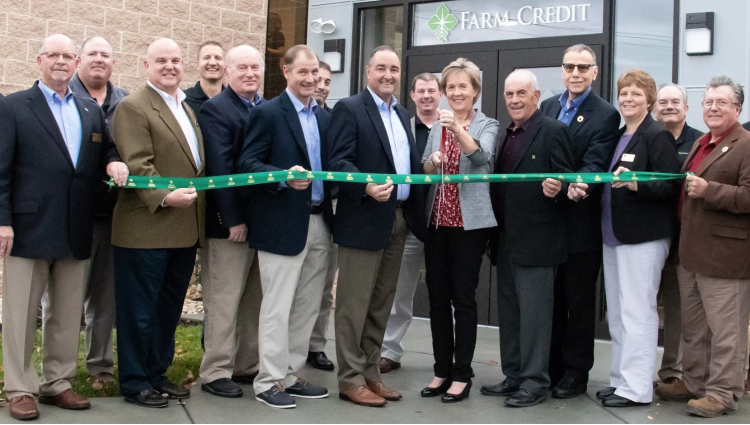
Horizon Farm Credit hosted an open house and ribbon cutting ceremony at their new office in Mount Joy, Pennsylvania on November 2. More than 350 customers and community members attended for tours of the office space, light refreshments and fellowship.
“We were happy to see so many of our member-borrowers and industry leaders come together to help us celebrate our new building,” says Darin Miller, regional lending manager for Horizon Farm Credit.
“Our team is excited about the numerous opportunities this new building will provide our customers and the community, as it is easily accessible to major roadways and provides adequate meeting space.”
Farm Credit presented a check for $5,000 to Feeding Pennsylvania to go toward the Fill a Glass with Hope campaign. An additional $300 was raised during the open house for the campaign through donations from attendees as they enjoyed Pennsylvania Dairyman’s Association milkshakes.
“On behalf of Feeding Pennsylvania’s member food banks, we are so grateful for this generous donation to our Fill a Glass with Hope program, the nation’s first statewide charitable fresh milk program,” says Jane Clements-Smith, Executive Director, Feeding Pennsylvania.
“With the help of our great dairy farmers and generous donors like Horizon Farm Credit, Fill a Glass With Hope has distributed nearly 10 million servings of fresh milk to families in need since its inception in 2015.”
The Lancaster County Chamber of Commerce participated in the ribbon cutting ceremony with Horizon Farm Credit board members and senior management.
“It’s an honor for the Lancaster Chamber to be a part of this great celebration,” says Josh Enders, Chamber Business Relations Director.
“We cannot thank Horizon Farm Credit enough for over 35 years of membership. With this new location, it shows Farm Credit’s commitment and dedication to Lancaster County and the agriculture industry.”
The office was purchased in November of 2017, and has since undergone tremendous renovations.
The building is a total of 25,000 square feet and is equipped with a community room, which is available for local organizations to use for off-site meetings. The office was officially open to the public on October 1.
Newsroom
How to Improve Your Credit Score
When you apply for a loan or some form of financing, your credit score will be used to help determine your interest rate and likely be a large factor in approval. This score is reflective of your overall financial health and tells the lender how likely you are to make payments on time.
HOW ARE CREDIT SCORES CALCULATED?
There are three consumer bureaus that collect and analyze credit information on consumers: TransUnion, Experian, and Equifax. These three agencies compile information on your open, closed and cancelled accounts. They also use public records to figure your credit score, including judgments, liens, and other public record items. The two most popular scoring agencies and reports are FICO® and VantageScore. Both scores vary from a range of 300-850 and consider the same five factors into the scoring model: payment history, debt owed, average age of accounts, types of credit in use, and new credit. Typically, the higher the score, the more likely you are to get the loan or financing request approved. Each lending institution has different cutoff scores.
If your credit score isn’t where you’d like it to be, you’re not alone and there are a few changes you can make today to set you up for success in the future.
5 TIPS TO IMPROVE YOUR CREDIT SCORE:
PAY YOUR BILLS ON TIME.
35% of your credit score is calculated with your payment history and even being just a few days behind can have a major negative effect on your score. Take a look at your accounts and determine what you need to do to get current on all of your accounts.
*Pro-tip: Set up payment alerts through your bank or even just monthly reminders on your phone to make sure you don’t miss another due date.
PAY OFF DEBT.
30% of your credit score is calculated with your amount owed on accounts. Reducing the amount of debt you have will help you avoid letting this debt grow exponentially. If you’re up to your elbows in credit card debt, stop using them. Take a look at all of your account balances and make an aggressive payment plan towards the credit card bills that carry the highest interest rate – these grow the fastest!
*Pro-tip: Don’t forget to make payments towards the smaller interest rate accounts as well. Ignoring the minimum payment on these will be a hit against payment history.
Be aware that paying off a collection account, or closing an account on which you previously missed a payment, will not remove it from your credit report and will stay there for seven years. If you are having trouble making ends meet, contact your creditors or see a legitimate credit counselor.
DON’T OPEN A LOT OF NEW ACCOUNTS RAPIDLY.
New accounts will bring down your average account age and have a larger effect if you don’t have a lot of other credit information built up. This can also look particularly risky to a lender.
BE DELIBERATE ABOUT RATE SHOPPING AND INQUIRING ABOUT CREDIT LINES.
If you’re looking for rates on a particular loan, try to keep this search in a focused period of time. FICO distinguishes between a search for a single loan and a search for a bunch of new credit lines partly by the length of time over which the inquiries are occurring.
BE DELIBERATE ON HOW YOU HANDLE CURRENT AND NEW CREDIT.
Closing unused credit cards as a short-term strategy to raise your score will not work. Similarly, opening a number of new credit cards that you don’t need, just to increase your available credit, won’t work either. Apply for new credit only as needed. This, combined with managing payments responsibly and paying off your debt, will help you re-build your credit score in the long term.
A few other important things to know:
- Avoid credit repair agencies that charge a fee to improve your score.
- It’s OK to request and check your own credit report. If you are ordering your credit report directly from the reporting agency or an authorized organization, it won’t affect your score.
WHAT GOES INTO MY FICO CREDIT SCORE?
Payment History – This comprises approximately 35% of your FICO Score. It includes your payment history on numerous types of accounts such as credit cards, retail accounts, installment loans, and finance company accounts. It also looks at public records and collection items such as bankruptcies, foreclosures, wage attachments, and liens; gives the details on late or missed payments, and the number of accounts that show no late payments.
The Amounts You Owe – Approximately 30% of your score is based on this. Credit utilization evaluates how much you owe compared to how much credit you have available. This takes into account the amount owed on all accounts, the amounts owed on different types of accounts, the number of accounts you have, the total credit line being used, and how much is owed on installment loans.
Length of Credit History – Approximately 15% of your FICO score comes from this. This includes how long your credit accounts have been established considering the age of your oldest, newest, and average age of accounts. Also, how long specific credit accounts have been established and how long it has been since you’ve used certain accounts.
New Credit – This category comprises approximately 10% of your credit score. FICO research shows that opening several credit accounts in a short period of time represents greater risk–especially for people who do not have a long credit history. Some things FICO considers is how many new accounts you have opened, how long it has been since you opened a new account, how many recent requests for credit you have made, length of time since credit report inquiries were made by lenders, and whether you have a good recent credit history which would follow any past payment problems.
Types of Credit in Use – Approximately 10% of your credit score comes from this. This is your mix of credit cards, retail accounts, installment loans, finance company accounts and mortgage loans. It is not necessary to have one of each, and you should not open a credit account you do not plan to use. Instead, it takes into account what kinds of credit accounts you have and how many accounts of each type you have.
WHAT A FICO SCORE IGNORES
A FICO score considers a wide range of information, but does NOT consider:
- Race, religion, color, national origin, or marital status
- Age
- Salary, occupation, title, employer, date employed or employment history
- Where you live
- Any interest rates charged on credit cards or other accounts, or
- Any items reported as child/family support obligations
WHAT INFORMATION IS ON A CREDIT REPORT?
Earlier, we discussed a little about how credit scores are developed based off of credit reports that are developed by the three main consumer bureaus, TransUnion, Experian, and Equifax. All though they are all separate entities, the credit reports they produce will have some common categories of information:
- Identifying personal information like name, date of birth, social security number and employment information. This isn’t used to determine your credit score.
- Trade lines, or credit accounts that you have established. These are bank cards, car loans, mortgages, etc. They will show the type of loan, when you opened the account, your credit limit, account balance, and payment history.
- Credit inquiries from loan applications or other involuntary means, like the pre-approved credit offers you receive from a bank in the mail.
- Public records, like bankruptcies and lawsuits, and information on overdue debt from collection agencies.
Now that you know what goes into a credit score and how to improve yours, go check out your current accounts and see what you can do to set yourself up for financial success in the future.